Cheltenham Festival Betting Strategy: Four Days of UK Jumps Markets
 Available in US
Four Days That Compress a Whole Season
I spent my first Cheltenham Festival in 2016 trying to bet every race. By Wednesday afternoon I was down four units, exhausted, and starting to make selections on the basis that I had to “get something back”. By Friday Gold Cup day I had broken every bankroll rule I had set myself. That was the festival that taught me the most expensive lesson of my punting career: the four days at Prestbury Park are not 28 races. They are 28 separate analytical problems, and almost nobody has the bandwidth to do all 28 properly.
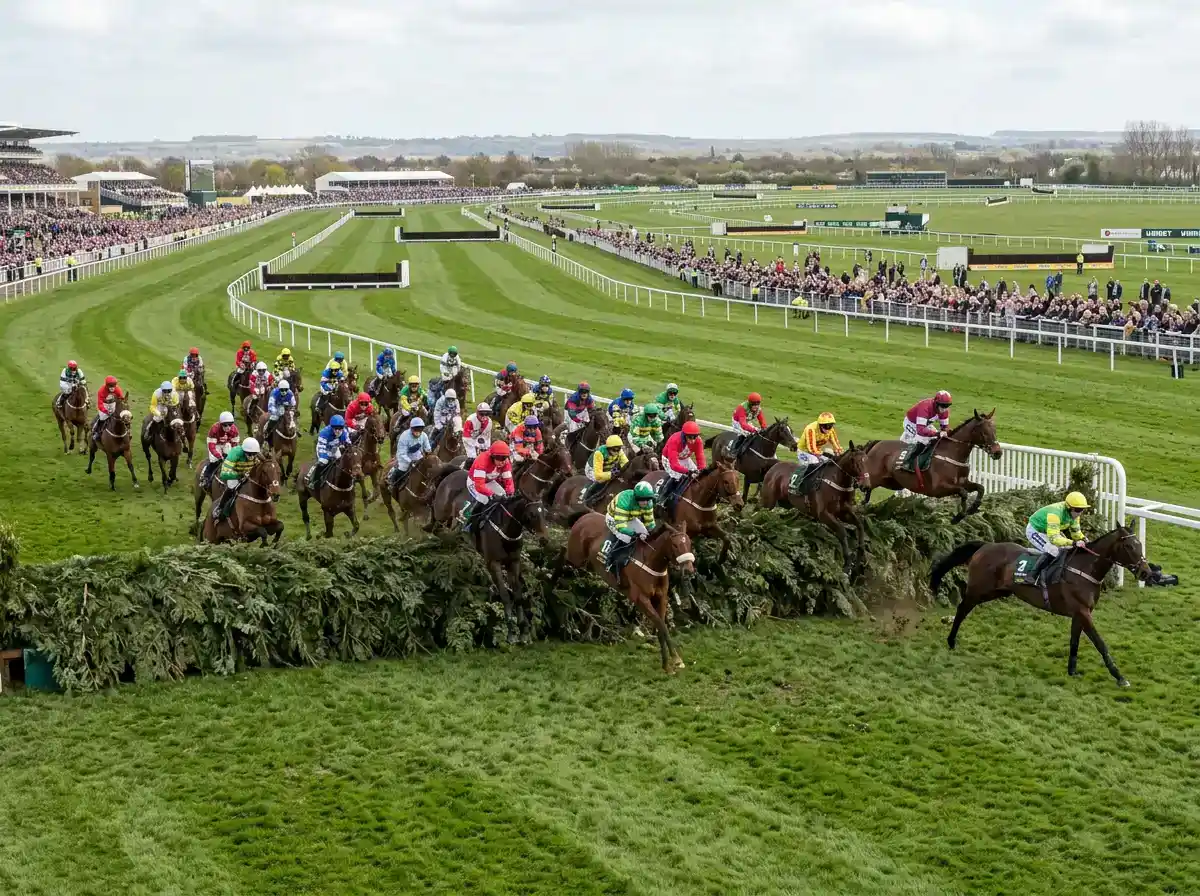
The Cheltenham Festival is what jumps racing reorganises itself around. Trainers across the UK and Ireland aim their best horses at specific Cheltenham targets from October onwards, which means the festival concentrates the highest-class jumps horses on the planet into four days at a single venue. For the punter, this concentration twists every normal handicap and favourite metric in ways that need explicit adjustment.
Learn more about best bet in horse racing on our main page.
The Structure of the Four Days
The festival runs Tuesday to Friday across the second or third week of March. Seven races each day, twenty-eight in total. Each day has a defined headline race that gives the day its name. Tuesday is Champion Hurdle day, the two-mile hurdle championship. Wednesday is Champion Chase day, the two-mile chase championship. Thursday is Stayers’ Hurdle day, the three-mile hurdle championship. Friday is Gold Cup day, the three-and-a-quarter-mile chase championship and the most prestigious race of the entire festival.
Beyond the headliners, each day mixes Grade 1 conditions races, handicap chases, handicap hurdles and novice events. The handicap races — the County Hurdle, the Coral Cup, the Plate, the Pertemps Final, the Kim Muir, the Martin Pipe — are where casual money concentrates and where the field sizes are largest. The Grade 1 events restrict the field to elite horses and produce shorter prices but more predictable form lines.
This structure has a direct strategic implication. The Grade 1 races are where the public watches and where favourites tend to perform. The handicaps are where the value lives but the variance is enormous. A punter who tries to engage with both types of races equally usually overstakes the handicaps and overestimates their form-reading on novice events. The discipline is to pick the race types that match your edge and ignore the others.
One layer worth understanding upfront. The festival is genuinely competitive between UK and Irish-trained horses, with the Irish often dominating Grade 1 markets in recent years. Form lines from Leopardstown, Punchestown and the Dublin Racing Festival in early February are heavily relevant to Cheltenham form analysis, and ignoring them costs you on Tuesday and Wednesday markets in particular.
The Gold Cup and the Other Headliners
The Gold Cup is the only race at the festival where almost everyone betting has an opinion, and almost everyone’s opinion is shaped by months of public coverage. Trainers’ winter campaigns are designed around peaking for this race. The handful of horses competing in the upper market are scrutinised from October onwards, with prep-race results in November, December and February shaping the ante-post markets all the way through to race day.
The implication for the win market is that the Gold Cup is one of the most efficiently priced races in UK racing. The chances of finding value among the top four or five in the market on Friday afternoon are slim, because every credible angle has been analysed by every serious punter in the country.
Where value sometimes hides is in the second tier. Gold Cup runners priced 14/1 to 33/1 are often horses with genuine credentials whose recent campaigns have been disrupted by ground, injury or trainer plans. The market treats them as outsiders because they have not been visible all season. A handful win or place every few years at meaningful odds, and the structural feature of the race — long trip, demanding fences, elite class — means that “underrated stayer with festival experience” is a recurring profile that the headline-driven market underprices.
The Champion Hurdle, Champion Chase and Stayers’ Hurdle follow similar patterns. The win markets are efficient at the top, with value occasionally hiding in the second tier. Each-way structures with bookmaker extra-place promotions are usually the more productive route into these races than win-only stakes on shortish-priced contenders.
For the headliners specifically, ante-post markets that opened during the previous summer are still tradeable through the morning of the race. Punters who took early prices on a horse that has since drifted are sometimes able to lay back portions of their position on the exchange before the off, locking in either guaranteed profit or reduced exposure depending on how the price has moved.
Where Value Actually Lives at the Festival
Novice races are the answer most experienced festival punters give when asked where value lives. Novice chases and novice hurdles — the Supreme Novices’ Hurdle, the Arkle, the Albert Bartlett, the Ballymore — are run between horses with limited public form, where the casual market over-relies on recent winners and trainer reputation while underweighting deeper form signals.
The reason novices produce value. The casual punter sees a horse that won impressively two months ago at a smaller meeting and assumes that form transfers cleanly to Cheltenham. It often does not. The festival exposes weaknesses that lower-grade races never test — class differences, pace pressure, ground demands, the specific demands of the Cheltenham hill. Horses whose form looks ordinary on paper sometimes outperform sharply because their build, jumping technique and stamina profile suit the festival specifically.
The selection method that produces results in novice races: look for horses with one or two strong recent runs that revealed specific qualities — strong jumping under pressure, late-pace acceleration, ability to settle in a strong-going early gallop — rather than horses whose recent form is just “consistently good”. The festival rewards specific qualities over generic competence, and the market routinely prices on the wrong metric.
The handicaps are the other major value pool, but for almost opposite reasons. Large fields, mid-tier horses, large variance of outcome. Each-way structures with extra-place promotions are the standard approach. Stake sizing should be smaller than for the championship races because the variance of any single selection placing in a 24-runner handicap is enormous, regardless of form quality.
What the 2024 Festival Told Us
Cheltenham Festival 2024 produced a 33% favourite strike rate across the four days, which is unusually high for the festival and includes a rare festival favourite winning the Grand National itself the following month. Headline interpretation: favourites performed well. Deeper interpretation requires unpacking what that 33% actually contained.
The 33% was unevenly distributed. Tuesday and Wednesday saw favourites perform broadly to expectation, with the championship races landing largely in line with market opinion. Thursday and Friday saw favourite-driven results in the handicaps and second-tier conditions races, where casual money piled into well-fancied horses on the back of the early-festival momentum. The variance was lower than usual, partly because several short-priced horses with very specific Cheltenham profiles came good simultaneously — the kind of clustering that happens occasionally but does not establish a new norm.
What the 2024 figures do not change is the longer-run reality: across most festivals, favourites win 25-30% of races, which is meaningfully below their headline market implied probability. The 2024 numbers are an above-average year, not a structural shift. Betting strategy that assumed the 2024 figures will repeat is the same mistake as backing every favourite blindly — it confuses one season’s outcome with the underlying long-run distribution.
The disciplined reading of 2024 is that favourite-friendly festivals happen occasionally, do not predict the next festival’s behaviour, and should not modify the standard approach of selective backing on form merits rather than blanket favourite-following. The Irish-trained share of winners was also high in 2024, continuing the trend of Irish dominance that has shaped festival markets since 2017.
Bookmaker Promotions on the Festival
The four days at Cheltenham are the most heavily promoted week in UK bookmaker calendars. Extra-place offers run across most or all races, Best Odds Guaranteed applies on race-day singles, and enhanced acca bonuses appear on multi-leg structures featuring festival selections.
The scale of promotional spend is real and tells you the bookmakers consider it a meaningful cost. Bet365 paid out more than £50 million on BOG-related payouts during Cheltenham Festival 2026 alone, and Sky Bet contributed roughly £10 million in extra-place coverage across the same four days. Across the major UK books combined, the festival’s promotional payouts likely run to over £100 million — a number that exists because the casual betting handle on the festival is large enough to justify the promotional costs as a customer-acquisition investment.
For the disciplined punter, this promotional environment is the single most punter-favourable week of the year. Extra places convert marginal each-way selections into positive-expectation bets. BOG protects against early-price drift on winning singles. Enhanced acca bonuses on Lucky 15-style structures reduce the compounded margin enough to make the bet structurally viable rather than structurally losing. Used together across selected races, these promotions add several percentage points to the expected return on bets that would otherwise sit close to break-even on standard terms.
The practical discipline. Open active accounts at three or four major UK books before the festival starts. Check each book’s promotional terms on the morning of each day’s racing. Route each-way bets through whichever account offers the most generous extra-place terms for that specific race. Use BOG-eligible early prices on win singles rather than waiting for SP. Avoid the longer accumulators outside Lucky 15 structures, where the compounded margin still dominates even with festival bonuses.
One related thread that connects the festival to the wider flat season picture is the structural difference between jumps-focused festivals and flat-racing festivals. The Royal Ascot strategy in five-day flat racing’s UK showcase covers the alternative pattern, where the dynamics around top-class flat horses and large casual audiences create a different value-extraction problem from Cheltenham’s NH-class concentration.
The Four-Day Plan That Survives Friday
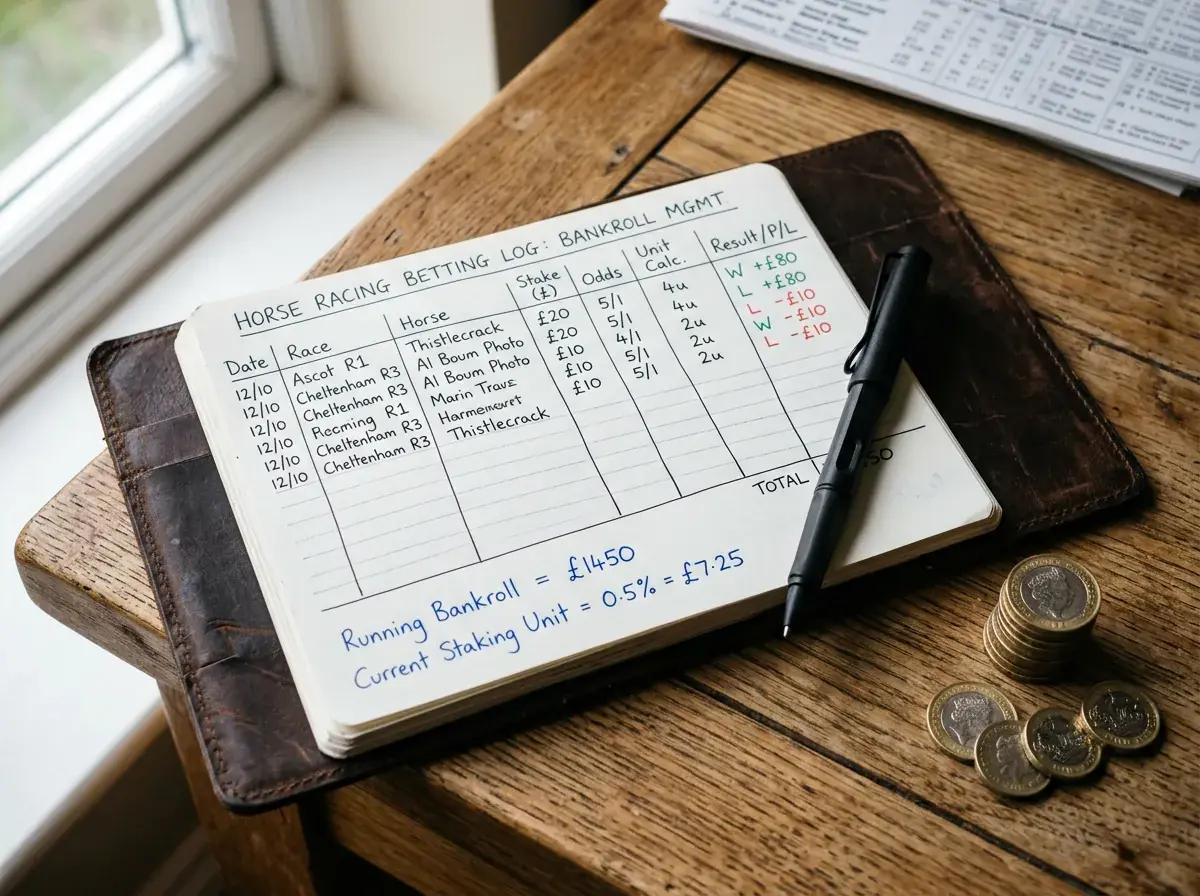
The plan that experienced festival punters use, in some variation, is structural. Pick three or four races per day to engage with seriously, based on where your form-reading actually identifies edges. Pass the rest. Set a per-day stake budget that totals less than a fifth of your festival bankroll, so that a bad first day does not destroy your Friday. Use each-way structures with extra places on speculative selections, win-only on high-conviction shorter prices. And accept in advance that bad days happen — a single Cheltenham day with no winners is not a signal that your edge is broken.
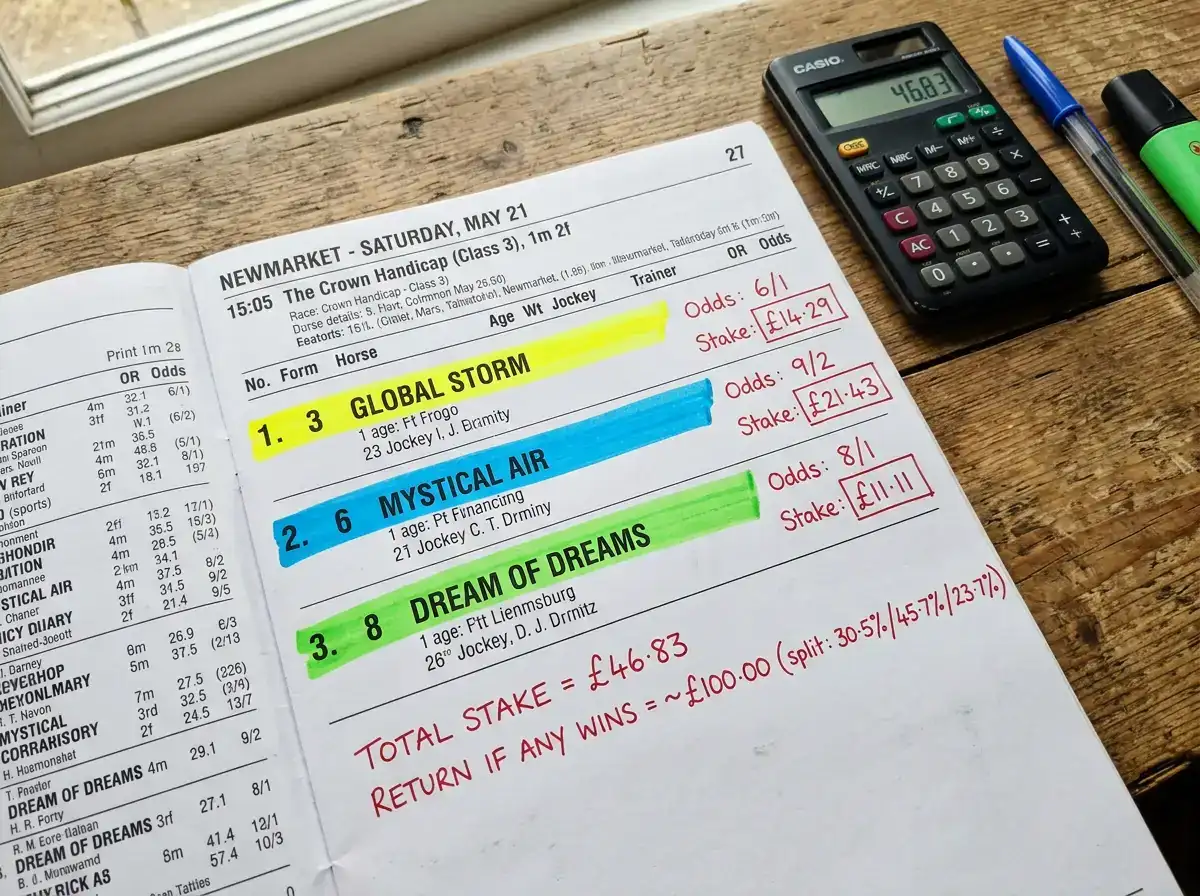
You may also find Dutching in UK Horse Racing: Covering Multiple Runners for a Fixed Return interesting.
The punters who survive the festival are the ones whose Friday-evening position is shaped by twenty-eight individual decisions rather than by an emotional state. Treat the four days as separate stretches of selective engagement, and the festival works for you instead of running you over.
Do Irish-trained horses dominate Cheltenham?
They have done since around 2017, with Irish-trained winners taking more than half the festival’s races in several recent years. The pattern reflects sustained investment in Irish jumps yards, the strength of the Dublin Racing Festival as a Cheltenham trial circuit, and the way Irish form lines have consistently translated to Prestbury Park. The implication for UK-based punters is that Irish form lines from Leopardstown and Punchestown in January and February are essential context for festival selection, and ignoring them costs serious money on the Grade 1 events in particular. The pattern shows no sign of reversing in 2026.
What’s the average Cheltenham winner price?
The average Cheltenham winner price across recent festivals has sat in the 8/1 to 10/1 range, which is meaningfully longer than the average winner price at most UK meetings. This reflects two things: large fields with extended each-way coverage produce more outsiders winning than at smaller meetings, and the festival concentrates elite horses whose internal class differences are smaller than at lower-tier meetings, so the market spreads the win probability more broadly across the field. The 2024 favourite-heavy year was an exception that pulled the average lower than usual, and the longer-run figure remains in that 8/1 to 10/1 band.
Created by the ”Best bet in Horse Racing” editorial team.