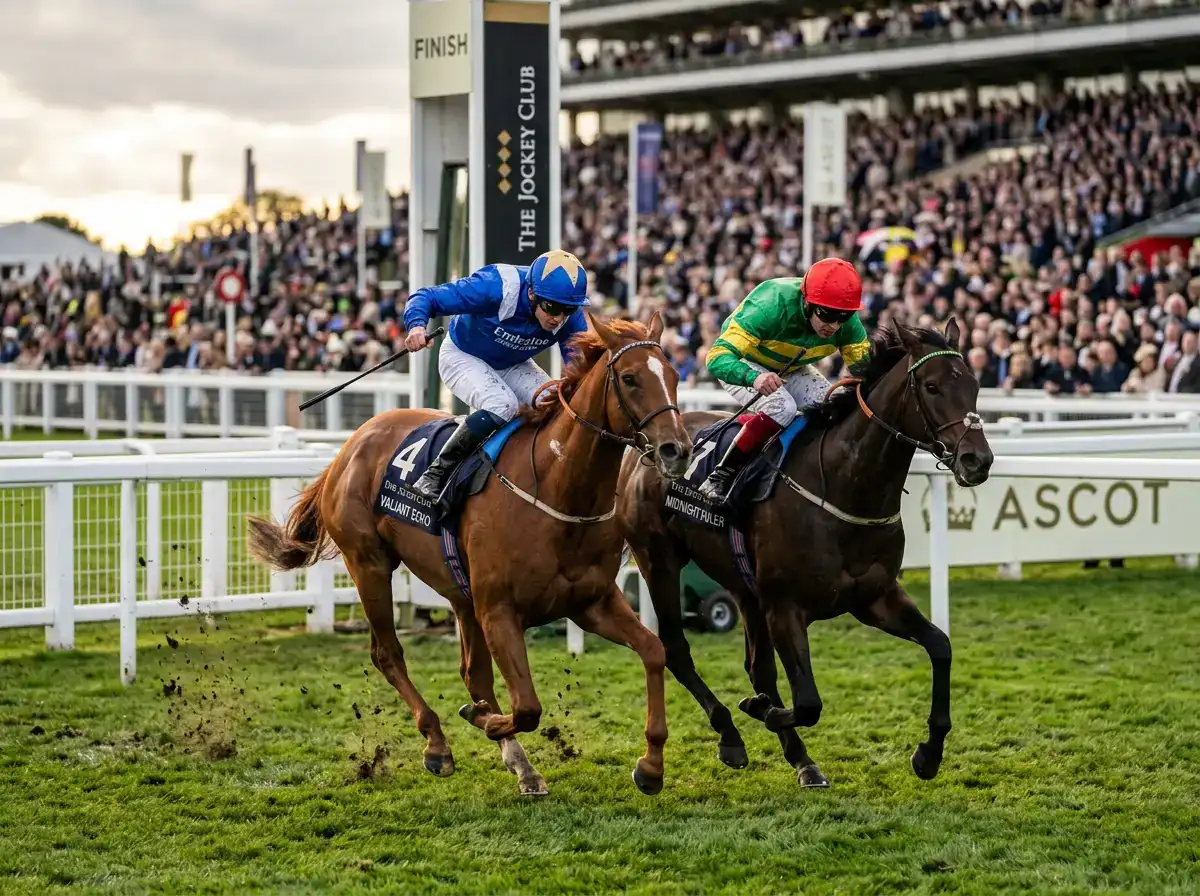
Ante-Post Betting on UK Horse Racing: Risk, Reward and Non-Runner Rules
 Available in US
The Bet Where You Pay for Time
In January 2023, I backed a horse for the Cheltenham Gold Cup at 16/1 in early February. By Gold Cup day the horse was 9/2. Then he was pulled out four days before the race with a tendon issue. My ante-post stake — placed before the non-runner rules kicked in — was gone. No refund. No consolation. The horse never even loaded the lorry.
That is ante-post betting in its most painful form, and the bet I should have placed instead — with non-runner-no-bet terms attached — would have refunded the stake when the horse withdrew. The difference between the two bets is the difference between disciplined ante-post punting and naive ante-post punting, and the gap between them runs into hundreds of pounds across a year of festival markets.
Ante-post is the bet you place before final declarations, on markets that open weeks or months ahead of the race. The price is usually meaningfully better than what you can get on the day — sometimes twice as long. The price you pay for that uplift is exposure to non-runners. Understanding that exchange is the whole craft.
Find the best options for best bet in horse racing.
How Ante-Post Actually Works
Ante-post markets open for major races as much as twelve months in advance. The Grand National market sits on the boards from the previous April. The Cheltenham Festival opens in earnest from the start of the previous season. The Derby is priced from autumn of the year before.
What you are betting is that a specific named horse will both run and win the race. If your horse runs and wins, you collect at the ante-post price. If your horse runs and loses, you lose your stake, exactly as in any other bet. If your horse fails to make the race for any reason — injury, retirement, change of plan, missed entry, anything — you also lose your stake under the default ante-post terms.
That last clause is the one new ante-post punters miss. The horse does not need to lose. The horse needs only to not show up. Ante-post is a bet on running and winning, not just winning. The bookmaker’s edge in ante-post markets comes substantially from the non-runner cases — horses that get backed, attract money, and then never run, with all that money quietly retained by the bookmaker.
The compensating advantage for the punter is the price. A horse you might back at 5/1 on the day of the Grand National could be 25/1 in January. That five-fold price differential reflects two things: the additional information that emerges between January and April, and the non-runner risk you are assuming. Done well, ante-post captures the price premium while managing the non-runner risk through specific bet structures.
Non-Runner-No-Bet: The Single Most Important Concession
Non-runner-no-bet (NRNB) is the rule that converts ante-post from a bookmaker-friendly trap into a punter-usable bet. Under NRNB terms, if your selection fails to run in the race, your stake is refunded. The win price you took is preserved if the horse does run — you do not lose the price advantage. NRNB is, in effect, ante-post pricing with the non-runner risk insured.
The catch is that NRNB does not apply throughout the entire ante-post window. Bookmakers introduce NRNB at different points before each major race, and the introduction is usually staggered across operators. For the Grand National, NRNB typically kicks in around the time of the five-day declarations. For Cheltenham, it varies race by race — the Champion Hurdle market might go NRNB at four weeks out, the Gold Cup at three weeks out, the Triumph Hurdle later still.
The practical rule. Always check whether the bet you are placing is NRNB or non-NRNB, and place your stake accordingly. Pre-NRNB ante-post — the very long-range market — should be reserved for selections you have such high conviction on that you are willing to absorb the non-runner risk for the better price. Post-NRNB ante-post is the safer structure for most punters and most selections.
One trap. Some books advertise an ante-post market as NRNB but with restrictions — only on horses currently below a certain price, only for bets placed below a certain stake, only for accounts in good standing. Read the small print. The NRNB protection is the entire reason to take certain ante-post bets, and a hedged version of it can leave you exposed without realising.
The Major Markets Worth Knowing
Three ante-post markets dominate UK punter attention. The Grand National opens earliest and runs longest. The Cheltenham Festival markets are the deepest. The Derby attracts the most flat-racing ante-post money each spring.
The Grand National in particular has economic weight that gives the market unusual depth. The race generates around £60 million annually for the Liverpool City Region economy alone, and the wider betting handle across UK books on Grand National Saturday runs to many tens of millions. As Lord Charles Allen, chairman of the BHA, framed the broader picture: “We are Britain’s second largest spectator sport, supporting 85,000 jobs and delivering over £4bn of economic value every year.” That economic weight translates into an ante-post market that opens early, attracts substantial money, and produces visible price movement throughout the spring.
The pattern across all three. Prices in the early window — December through February for Cheltenham, January through March for the Grand National, autumn through April for the Derby — reflect informed opinion and stable form rather than late market noise. Prices in the final two weeks reflect declaration intentions, ground assessments and weight allocations becoming visible. Prices on the day reflect on-course money and stable confirmations.
Each window has its own value characteristics. Early money rewards horses with developing form profiles and trainers known for keeping plans flexible. Two-week-out money rewards confirmed entries with consistent recent form. Day-of-race money rewards reading the actual market response to public information rather than placing a forecast.
Timing the Market
The single most important question for an ante-post punter is when to enter the market. The earlier you bet, the better the price; the earlier you bet, the higher the non-runner risk; the earlier you bet, the more your opinion has to be based on form rather than fact. Three considerations pull against each other, and the right entry point varies horse by horse.
For horses with established form lines and trainers whose campaign management is predictable, an early entry — six to eight weeks out — captures most of the price uplift without enormous non-runner exposure. For horses making their seasonal reappearance, an early entry is usually too speculative; better to wait until at least one prep run has happened.
For festival-bound horses, the calendar of prep races dictates the timing. A horse pointing at the Champion Hurdle that wins a Christmas trial is typically the entry point for serious ante-post money — you have form confirmation, you have a stated target, and you are still ahead of the on-the-day market by enough margin to make the price meaningful. A horse pointing at the same race whose prep race produces a worrying performance is usually a sign to wait or skip the ante-post entirely.
The other timing consideration is the bookmaker’s own market evolution. Books reprice ante-post markets in response to entries, declarations, ground, weather, prep-race results and broader money flow. A horse that opens at 25/1 might trade through 12/1 over six weeks as money piles in, then settle at 8/1 on the day. The optimal entry point is usually before the first significant prep race result, not after — by the time the market has digested a good prep, the price has already compressed.
Managing Ante-Post Risk
The two practical risk-management tools for ante-post punters are stake sizing and NRNB discipline.
Stake sizing on ante-post should be smaller than your normal singles, because the non-runner risk adds variance the standard 1–2% bankroll rule does not directly account for. Half-unit stakes on pre-NRNB ante-post selections, full units on NRNB selections, is the structure I use. The half-unit pre-NRNB stake reflects the additional risk being absorbed for the price uplift.
NRNB discipline is the harder rule. The temptation when ante-post markets open is to bet early because the prices are best then. The disciplined response is to bet selectively on horses you would back at any price in that range, and to wait for NRNB on horses where your conviction is less absolute. The price differential between pre-NRNB and post-NRNB on the same selection is rarely as large as it looks — maybe 10–20% on a 10/1 shot — because the bookmaker prices in the NRNB protection. The protection is usually worth the modest price reduction.
One additional layer worth using is the spread of bookmaker accounts. Different books move ante-post prices at different speeds, and the price you can get on a given selection often varies by 20–30% across operators at the same moment. The discipline of checking three books before committing to an ante-post bet adds the same 2–5% annual ROI lift that multi-bookmaker pricing produces on day-of-race bets — except the differentials are usually wider on ante-post markets because price-making is less standardised. For a focused guide to the race itself, the analysis in strategy for UK’s biggest race at Aintree covers the specific dynamics that make Grand National ante-post different from other festival markets.
Where Ante-Post Earns Its Keep
Ante-post is a tool for punters who follow the form cycle closely enough to identify horses targeting specific races months in advance. It is not a beginner’s bet. The information advantage that makes ante-post profitable requires sustained engagement with stable yards, trainer patterns, ground preferences and prep-race interpretation. Punters who follow racing only at festival weeks should generally skip ante-post entirely — the price uplift cannot compensate for the information disadvantage.
Read our detailed review of Beaten Favourites Strategy: UK Racing’s Most Tested Angle.
For punters with the engagement, ante-post is one of the cleanest ways to extract value from the UK market. Prices are wider, opinions are deeper, and the markets are less efficient than day-of-race books because the on-course money has not yet sharpened the line. Used selectively, with NRNB discipline and proper stake sizing, ante-post produces a meaningful share of long-term profit for serious form-readers. Used carelessly, with full stakes on pre-NRNB long shots, it is a slow path to bankroll attrition through non-runner losses that the casual punter never sees coming until the morning of the race.
When do ante-post markets become NRNB?
It varies by race and by bookmaker. For the Grand National, non-runner-no-bet terms typically apply from around the five-day declaration stage, though some books introduce it earlier. For Cheltenham Festival races, NRNB usually kicks in two to four weeks before the race depending on the specific contest. For the Derby, it tends to apply from around the final-entry stage. Always check the specific book and the specific race — the small print determines whether your stake is refunded on a withdrawal, and the answer is not consistent across the market.
Should beginners bet ante-post?
Generally no. Ante-post requires sustained engagement with form, trainer patterns and race campaigns to identify horses likely to run and likely to be undervalued by the early market. Beginners typically lack the information context to identify those opportunities, and the non-runner risk hits harder when stake sizing is not yet disciplined. A reasonable middle ground is to start with NRNB-only ante-post selections on horses already entered for the target race, at small stakes, as a way of learning the market mechanics before committing serious bankroll to pre-NRNB positions.
Prepared by the Best bet in Horse Racing editorial staff.