Horse Racing Going Explained: Soft, Heavy, Firm and Why It Wins Bets
 Available in US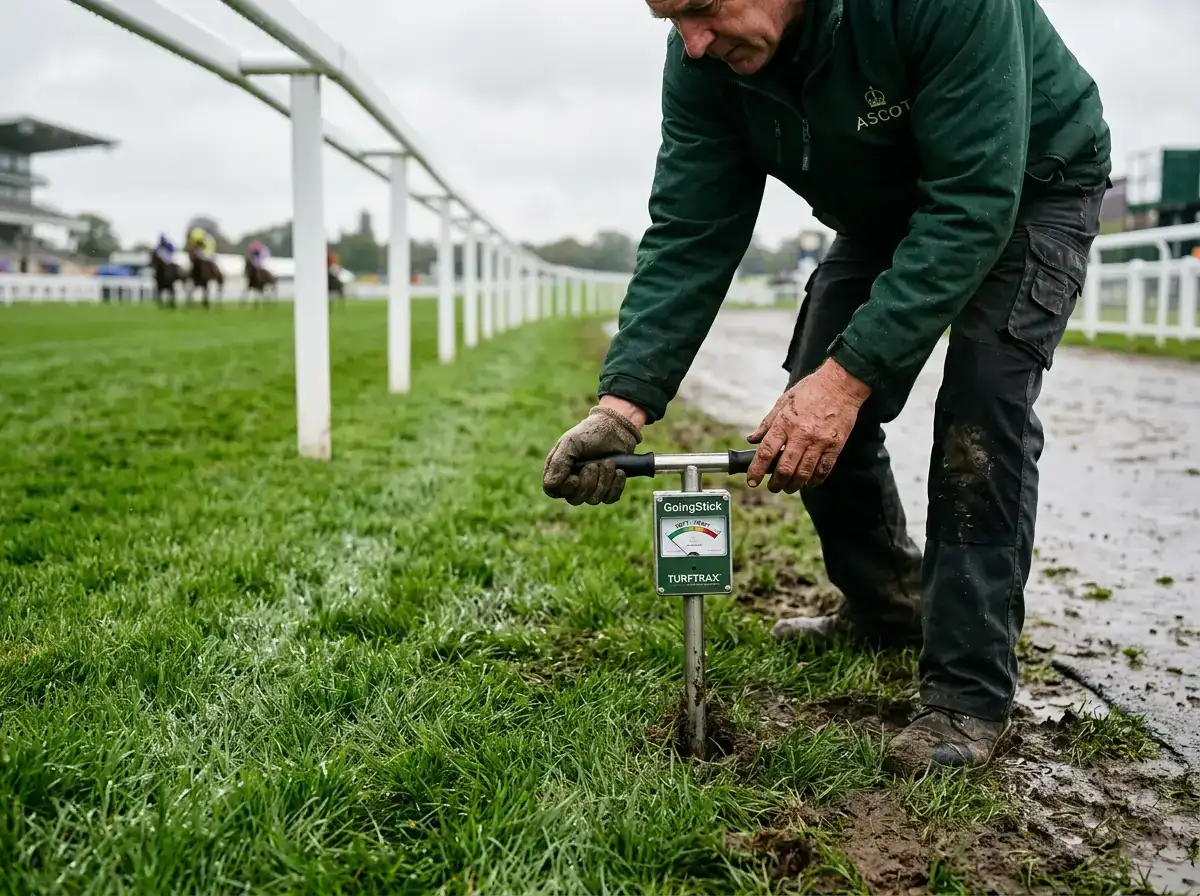
The Morning Inspection That Changes Every Bet on the Card
A November Saturday at Cheltenham in 2019 taught me to take going seriously. The card was due to run on good-to-soft ground. Overnight rain shifted the inspection from good-to-soft to soft, then to heavy by midday. Every selection I had made the night before was based on horses comfortable on faster ground. By the time I tore up my notes and rebuilt my bets, the bookmakers had already adjusted their prices to reflect the new going, and most of the value I had spotted in the morning had evaporated.
Going is not a footnote on the racecard. It is the variable that more often than any other determines which horses can produce their best form and which cannot. A horse who runs to a 90 rating on good ground may run to 75 on soft, or improve to 95 on heavy if their pedigree and physique suit a slog. The market knows this in aggregate but routinely lags in pricing it in detail, and the punter who reads going carefully catches the resulting mispricings on a regular basis.
Discover everything about best bet in horse racing here.
The Going Scale
UK going descriptions move along a defined scale from firm to heavy. From driest to softest: firm, good to firm, good, good to soft, soft, heavy. Each step represents a meaningful change in how the ground rides under a horse’s hooves and how the race is likely to be run.
Firm ground is dry, hard and fast. Horses on firm ground produce quicker times but face greater risk of jarring injuries, and many trainers will withdraw horses rather than run them on firm. The going is rare on UK tracks because Clerks of the Course typically water the surface to keep conditions in the good-to-firm range during summer. Genuine firm is more common at courses with limited watering capability or during extended dry spells.
Good to firm is the standard summer description, slightly faster than good, found on most UK flat-racing surfaces from June through August in dry conditions. Good is the canonical description and the going on which the most race-form data exists — comparing a horse’s form on good against their form on softer surfaces is one of the cleanest analytical comparisons available.
Good to soft begins the softer end of the scale. The surface is yielding, races run slower, and stamina becomes more important relative to pure speed. Soft means the ground gives noticeably underfoot, race times slow further, and a meaningful subset of horses simply will not handle the surface well. Heavy is the softest official description in UK racing — saturated ground, slow surface, severe stamina test, and the going where pedigrees that emphasise stamina over speed are most clearly favoured.
The granularity matters. The difference between good and good to soft can shift a 5-furlong sprint by several seconds across the field, and that translates directly into different horses winning the race. Reading going at the half-step level, not just the broad-stroke level, is part of the discipline.
The Going Stick and What the Numbers Mean
The Going Stick is an instrument used by UK racecourses to provide a numerical measurement of ground conditions alongside the descriptive going report. It measures the force required to push the stick into the ground and to twist it through 45 degrees, producing a number on a scale from roughly 4 to 12. The harder the ground, the higher the reading.
Approximate translations between Going Stick readings and descriptive going on turf. A reading of 10 or higher generally corresponds to firm to good-to-firm. Around 8 to 9.5 is good. Around 7 to 8 is good to soft. Around 6 to 7 is soft. Below 6 is heavy. These boundaries are approximate and vary by course because the underlying turf composition differs between tracks.
The value of the numerical reading is precision. Two days described as “good to soft” can have meaningfully different Going Stick readings — one at 7.4, another at 6.9 — and the difference produces different race conditions even though the description is the same. Tracking the numerical reading alongside the descriptive going gives a sharper read on what the ground will actually ride like, and the trainers who pay closest attention to going often base their declarations on the Going Stick number rather than the description.
Going Stick readings update through race-day if conditions change — typically once after the early morning inspection and again before the first race. The disciplined punter checks the updated reading and adjusts selections if the number has moved materially from the overnight forecast.
Going Specialists and Where to Find Them
Some horses produce their best form within a narrow range of going conditions and become demonstrably worse outside that range. These are going specialists, and identifying them is one of the more reliable sources of long-term value in UK racing.
The classic heavy-ground specialist is a horse with sturdy build, deep girth, strong shoulders, and a pedigree heavy on stamina-emphasising sires. Such horses often appear modest on the standard form lines because their best efforts come in races where the rest of the field hates the ground. When heavy going arrives at the right course on the right day, the specialist’s prep becomes valid and the price the market offers them is frequently double their fair-value odds.
The firm-ground specialist is rarer in UK racing because firm going itself is rare. Where the profile exists, it is typically a lighter-built horse with high cruising speed and a pedigree emphasising precocious flat speed. Such horses can look ordinary on yielding ground and transform on fast ground, often at courses with limited watering capacity during summer dry spells.
The good-ground horse is the largest category and the hardest to identify as a specialist because so many horses produce their best form on good ground. The useful subset is horses whose form actively deteriorates on either side of good — they cannot handle yielding ground and cannot handle quick ground. Their consistent good-ground performances may be undervalued on mixed-going cards because the market does not always price for the going-specific aspect of their record.
Identification method. Take a horse’s last six runs. Note the going on each. Note the finishing position relative to the rating of the field. Patterns emerge surprisingly quickly. A horse who has been within two lengths of winning on good and good-to-soft going, but finished tailed off on the two occasions they ran on heavy, is telling you something the form summary does not directly state.
How Going Changes Race Form
The change in going from one race to the next is the single biggest determinant of whether form lines transfer. A horse who won impressively in soft ground last month is not the same horse on quick ground today, and treating their previous run as straightforwardly comparable produces selections that lose money.
The mechanism. Soft ground favours horses with stamina, jumping ability and the cruising speed to hack through demanding conditions. Quick ground favours horses with finishing pace, smooth action and the ability to quicken in the closing stages. Different physical and stylistic attributes win on different surfaces, and the same horse may have one set of attributes but not the other.
This is why trainers spend so much energy on going. A horse pointed at a specific race target — a handicap they have been laid out for — needs the right ground to deliver their best. A change in forecast can ruin the plan, and trainers will sometimes withdraw rather than run on unsuitable going. Withdrawals on going grounds are one of the cleaner signals available: if a high-percentage trainer withdraws a fancied horse because the going has changed, that is information the market may not fully reflect on the remaining runners.
The reverse signal is also useful. A horse declared to run when the going has clearly become unsuitable for them is often being prepped for a future race rather than competing seriously. Their performance should be discounted, and they may be available to back at meaningfully better prices next time when the going matches their profile.
The 2025 UK racing-in-training count of 21,728 horses — down 2.3% on 2024 — means a slightly smaller pool of going specialists across the calendar, and the going-specialist horses are competing in fewer races where their profile matches the conditions. The implication is that when a known going specialist meets their ideal conditions, the value is sharper than in years when the population of competitors was larger.
All-Weather Versus Turf
UK racing operates two parallel surfaces: traditional turf and all-weather. The all-weather courses run on synthetic surfaces — polytrack at Lingfield, Kempton and Chelmsford, tapeta at Newcastle, Southwell and Wolverhampton. These surfaces produce different going characteristics from turf and require their own analytical approach.
The going on all-weather is reported on a separate scale: standard, standard to slow, slow, fast, standard to fast. The mechanics differ from turf because the synthetic surface drains differently, absorbs moisture differently, and produces different traction patterns. A horse who handles soft turf well may struggle on slow polytrack, and vice versa — the two surfaces test different qualities even when the descriptive going sounds similar.
The cleaner all-weather form lines are one of the structural reasons the all-weather circuit produces more predictable racing. Lingfield’s 50% favourite win rate across recent reporting — the highest of any UK course — partly reflects the stability and predictability of the polytrack surface compared with turf, where weather-driven going changes introduce more variance into the form lines.
The practical separation. Treat all-weather form as a separate dataset from turf form. A horse’s record on each surface should be evaluated independently, and form lines should not be assumed to transfer cleanly between the two. The horses who transfer well are usually identified through their own racing history rather than predicted from any general rule, and the trainers known for getting horses to handle both surfaces are a small subset of the wider training population.
This is where deeper data analysis pays off, and the next layer of analytical work on top of going is examining the actual people behind the horses — trainers and jockeys whose patterns offer their own signals about whether a runner will deliver. The detail is in the numbers UK punters should track on jockey and trainer form, which complements going analysis by quantifying the human side of horse preparation.
The Edge That Comes From Reading the Ground
Going analysis is one of the cleaner edges in UK racing because the data is freely available, the patterns are stable, and the market consistently underprices the fine-grained going-by-horse interactions. The discipline is to check the Going Stick reading and descriptive going every race-day, to identify the going-specific patterns in each runner’s form, and to skip races where the ground does not suit your initial selection. Across a season, this filter alone produces a meaningful share of the value disciplined punters extract from the market. Most casual punters check going once before placing their first bet of the day and never look at it again. Reading the ground continuously, race by race, is what separates a Saturday spent guessing from a Saturday spent reasoning.
Check out our guide on Horse Racing Pace Maps: Reading Run Style for Better UK Bets as well.
What GoingStick number is considered soft?
A Going Stick reading in the range of approximately 6 to 7 generally corresponds to soft going on UK turf, with readings below 6 typically indicating heavy ground. These boundaries are approximate and vary by course because the underlying turf composition differs between tracks — a reading of 6.8 at one venue can ride like a reading of 6.3 at another. The numerical reading is most useful when tracked alongside the descriptive going and compared with the same course’s readings in previous similar conditions. Trainers who pay closest attention to going often base their declarations on the Going Stick number rather than the descriptive going.
Do firm-ground horses ever win on heavy?
Occasionally, but it is the exception rather than the pattern. A horse whose best form is concentrated on firm or good-to-firm going usually has the physical attributes — finishing pace, lighter build, fast cruising speed — that the soft surface neutralises. On heavy ground, those attributes produce ordinary results rather than winning ones. The horses who win on heavy when their record suggests they should not are typically those whose form data was simply too thin to show their full going range, or those whose preparation has changed in ways the form line does not yet capture. Both are rare enough that betting against the going profile is usually a losing strategy.
Published by the Best bet in Horse Racing team.