How Affordability Checks Reshape UK Horse Racing Promos and Free Bets
 Available in US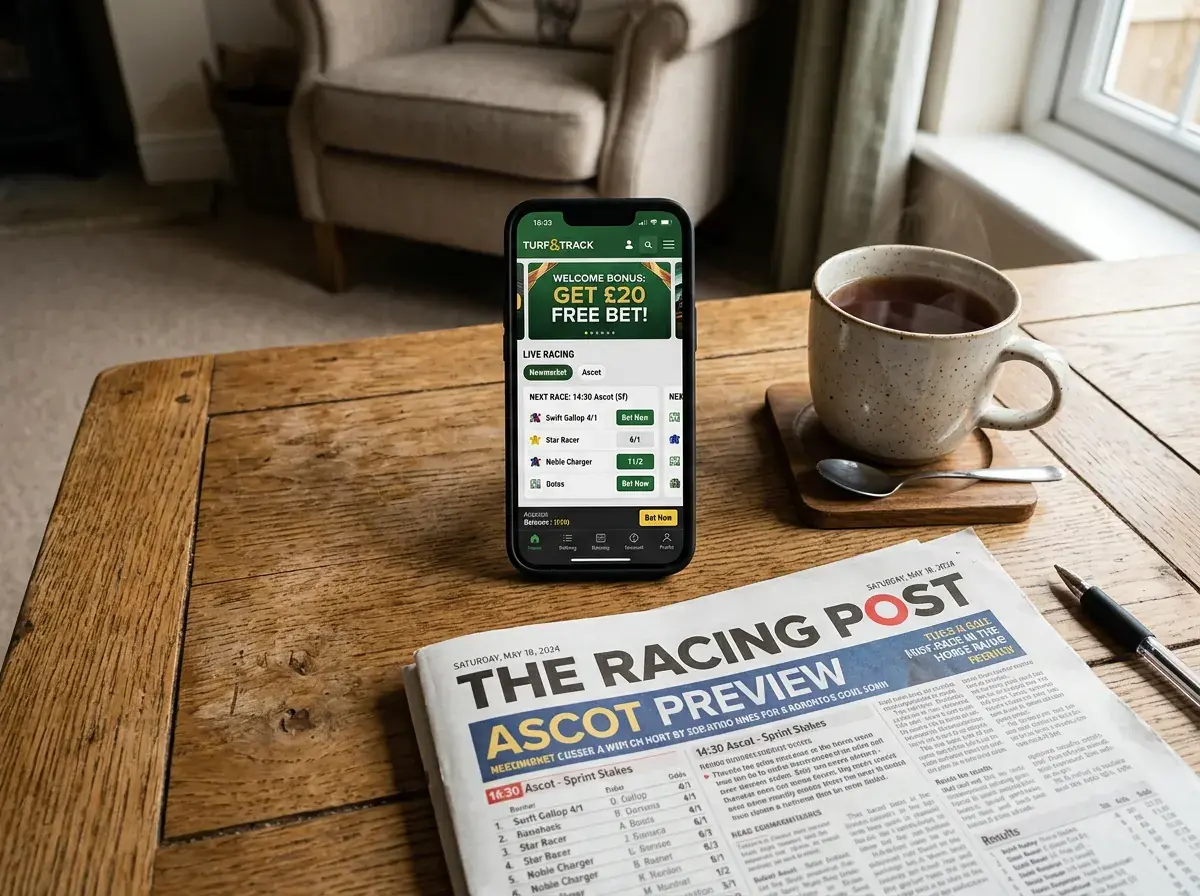
The Promotional World That Used to Exist
I opened my first bookmaker account around 2014. The welcome bonus matched my deposit pound for pound up to £200, BOG applied to every UK race I bet on, extra-place offers covered most Saturday handicaps without restrictions, and the loyalty scheme paid free bets back at a rate that genuinely rewarded weekly engagement. By 2026, the same operator’s welcome offer is £30 in free bets, BOG is restricted to specific account tiers, extra-place coverage shows up on a quarter of the races it used to, and the loyalty scheme has been quietly retired.
That trajectory is not an accident. The affordability regime introduced in 2024-25 has not only changed the experience of high-stakes punters at the threshold level — it has changed the economic logic of running promotions for all customers across the UK market. Understanding how affordability checks reshape the promotional environment matters whether or not your specific account has ever triggered a check, because the promotional changes affect every UK punter regardless of stake size.
Discover everything about best bet in horse racing here.
How Promotions Made Money in the First Place
Bookmaker promotions look like generous offers to customers but they exist because they produce revenue in the long run. The economics of a promotion are built around three mechanisms. First, customer acquisition — a free bet or generous welcome offer brings in a customer whose subsequent lifetime betting activity generates margin that exceeds the promotion cost. Second, customer retention — ongoing promotions like BOG keep existing customers active and prevent them migrating to competitors. Third, behavioural shaping — promotions tied to specific bet structures encourage customers toward bets where the bookmaker margin is higher.
The maths required for promotions to make sense rest on customer-lifetime-value calculations. A welcome bonus that costs the bookmaker £50 needs to produce a customer who generates more than £50 of margin contribution over their account lifetime. A BOG promotion that costs the bookmaker around 5-10% of annual profitability on each customer’s racing winnings needs to retain that customer through enough subsequent betting activity to outweigh the cost.
The affordability regime changes the inputs to these calculations. A customer flagged through affordability checks at low thresholds — the £150 monthly deposit level introduced in February 2025 — has a shorter account lifecycle, lower lifetime stakes, and reduced operator profitability before account restrictions trigger. The same promotional spend produces less return per customer in the new regime than it did in the previous one.
The operator response is to reduce promotional spend, target it more narrowly, and impose tighter conditions on the promotions that remain. The visible result is what every UK punter has noticed across 2025 and 2026: shrinking welcome bonuses, narrowed BOG eligibility, more conditional offers, and the gradual disappearance of loyalty mechanics that used to reward sustained engagement.
Welcome Bonuses Going Quietly Away
The welcome bonus segment has been the most visible casualty of the affordability environment. The deposit-matching offers that dominated UK bookmaker marketing through the 2010s — £50 deposit matched, £100 deposit matched, occasionally £200 deposit matched — have largely been replaced by smaller free-bet structures, conditional on first-deposit and first-bet behaviour.
The typical 2026 welcome offer for a new UK racing customer is in the £10 to £40 range, structured as bet-and-get rather than deposit-matched. The customer makes a qualifying first bet at minimum odds, and once it settles — win or lose — they receive a free bet of comparable value. The structure is cheaper for the operator than the old deposit-matched bonus because the qualifying bet has already produced margin, and the free bet is restricted to specific markets and minimum-odds conditions that constrain how much value the customer can extract.
The reasons for the contraction sit at three layers. The affordability regime makes high-deposit new customers harder to convert into long-term profitable accounts, because the deposits themselves trigger early affordability flags. The wider gambling duty environment, with Remote Gaming Duty rising to 40% from April 2026, squeezes operator margins on the non-racing parts of their business and forces tighter discipline on customer acquisition costs across the board. And the casual customer-base contraction that has driven UK racing turnover down across 2023-2025 reduces the long-run revenue available to fund welcome offers in the first place.
The competitive dynamic is also worth noting. With most major UK operators facing similar economic pressures simultaneously, the welcome-offer market has reached a sort of mutual reduction equilibrium. No single operator is willing to lead with a significantly larger welcome bonus because the cost would not be recovered through subsequent customer activity at the new lower lifetime-value figures. The result is that the entire welcome-offer environment has shrunk in lockstep rather than through individual competitive moves.
BOG and Extra Places Under Quiet Squeeze
Best Odds Guaranteed remains nominally available across most major UK books in 2026, but the reality has changed substantially. New customer cohorts often receive full BOG for an introductory period — three months, six months, sometimes a year — before being quietly transitioned to reduced versions. Stake-factored accounts may continue to receive BOG-eligible terms but at capped maximum stakes that limit the absolute payout. Some accounts are switched to early-price-guarantee structures instead of full BOG, which pay the better of the taken price or board price but exclude the SP — usually the most valuable of the three.
The financial reality of BOG drives the squeeze. Bet365 paid out more than £50 million on BOG-related payouts during the Cheltenham Festival 2026 alone — a single four-day meeting. Multiply that across the calendar and BOG becomes a meaningful line item on a bookmaker’s profit and loss statement. In a market with shrinking customer base and tighter regulatory cost, the BOG cost looks increasingly unsustainable on its previous unrestricted basis.
Extra-place offers have followed a similar trajectory. The promotion remains visible on Saturday handicaps and at major festivals — Sky Bet paid approximately £10 million in extra-place coverage during the Cheltenham Festival 2026 across the four-day meeting — but the coverage on weekday meetings has thinned, and the offers on Saturday cards apply to a narrower range of races than they did three years ago.
The 5-10% annual profitability lift that BOG historically added to disciplined UK racing punters has narrowed in two ways. First, the customer base eligible for unrestricted BOG has shrunk. Second, the proportion of races with full BOG eligibility has reduced. The structural value of the promotion is still real for punters who can access it, but the access itself is the gating factor that has changed.
Restricted Accounts and What Triggers Them
Restriction has become the normal account lifecycle outcome for any UK punter who produces sustained positive results. The triggers are well documented across multiple operators and they cluster around recognisable patterns.
Bet selection patterns are the most common trigger. Accounts that consistently take BOG-eligible early prices on UK racing, place each-way bets on extra-place-promotion races, and concentrate stakes on horses with sharp recent form profiles match the behavioural signature of value-seeking punters. The bookmaker’s profiling systems identify the pattern within a few weeks of account opening, and the restriction follows automatically.
Withdrawal patterns are another trigger. Accounts that withdraw winnings promptly after collecting on bets, rather than recycling them into further wagering, signal customer behaviour that the bookmaker associates with sharp punting rather than casual entertainment. Even accounts with modest stake sizes can trigger restriction through withdrawal patterns alone if those patterns are sufficiently consistent.
Stake patterns matter too. Accounts that stake consistently regardless of casual-market hype — same stake on Cheltenham Tuesday as on a midweek Newcastle card — match the profile of disciplined punters. Casual customers stake heavily on showpiece events and light on weekday meetings, and the deviation from that casual pattern is one of the signals operators use to identify sharper accounts.
The restriction itself usually arrives quietly. Maximum stake gets reduced to between £20 and £50 on race singles, BOG eligibility is removed, extra-place offers no longer apply, and the account continues to operate at terms that make sustained positive ROI impossible. The customer is not informed in any detailed way — the changes simply appear when the next bet is placed.
The interaction with the affordability regime adds another layer. An account that has been flagged for affordability review and is operating under enhanced due diligence is much more likely to face simultaneous stake-factoring, because the operator’s overall risk assessment has tightened on multiple dimensions at once.
Where Value Still Survives
Inside the contracted promotional environment, value has not disappeared entirely — it has migrated to specific corners of the market that the disciplined punter can still access. The first is multi-account operation. Maintaining active accounts at four or five major UK books spreads activity across operators and reduces the speed at which any single account triggers restriction. The 2-5% annual ROI lift that comes from using two or three accounts to compare prices remains intact for punters willing to do the operational work.
The second is festival weeks. The major UK festivals — Cheltenham, Aintree, Royal Ascot, Glorious Goodwood — continue to attract the most generous promotional activity because the casual betting handle justifies the spend. Extra-place coverage, BOG-eligible early prices, enhanced acca bonuses on Lucky 15-style structures all persist at festival weeks even where they have been withdrawn from weekday meetings. The festivals are where the promotional environment of the previous decade is most preserved.
The third is the exchange. Betfair Exchange operates on different economic principles from traditional bookmakers — commission on winnings rather than overround on prices — and the affordability environment affects it differently. The exchange does not run BOG or extra-place promotions in the bookmaker sense, but the underlying prices are sharper, the commission structure is transparent, and account restriction operates on different triggers than at traditional operators. For punters whose primary bookmaker accounts have been restricted, the exchange remains a working alternative that the bookmaker market’s contraction has not affected.
The fourth is welcome offers cycled across new accounts. With existing accounts increasingly restricted, the welcome bonuses available on first-time accounts at new operators retain their value for punters willing to cycle through new sign-ups. The headline values are smaller than they were five years ago, but they remain real promotional value that has not been entirely consumed by the affordability environment.
One adjacent layer that intersects with the promotional environment is the mobile workflow that lets punters compare prices and execute bets across multiple operators efficiently. The full discussion of practical multi-account betting is in UK punter workflow that saves money via mobile apps, which covers the operational mechanics of operating across the restricted promotional environment.
Check out our guide on Bankroll Management for UK Horse Racing Punters: Stake Sizing That Survives Variance as well.
The New Operating Equilibrium
The UK racing promotional environment of 2026 is structurally different from the environment of 2022, and the change is not temporary. Affordability checks have reshaped the customer-lifetime-value calculations that determine which promotions make commercial sense. The wider gambling duty environment has tightened operator margins. The customer-base contraction in UK racing has reduced the revenue base available to fund promotions in the first place. All three forces operate in the same direction, and the equilibrium they have produced is one in which promotions are smaller, more conditional, more narrowly targeted, and harder to access on sustained terms than they used to be. The punters who continue to extract promotional value operate across multiple accounts, concentrate effort on festival weeks where the old promotional environment partially survives, and treat the exchange as a permanent fixture of their workflow. The promotional world of 2014 is not coming back. The version that exists now still has value in it, but accessing it requires more deliberate effort than before.
Why are welcome bonuses getting smaller in UK racing?
Three forces compound. Affordability checks reduce the long-run customer-lifetime-value of newly acquired accounts because high-deposit customers trigger early restrictions, which makes the old deposit-matched bonus structures uneconomic for operators. Wider gambling duty increases squeeze operator margins on the non-racing parts of their business and force tighter discipline on customer acquisition costs. And the underlying UK racing customer-base contraction reduces the revenue available to fund welcome offers in the first place. The combination has pushed the entire market into a lower-bonus equilibrium where no single operator is willing to lead with significantly larger offers because the cost would not be recovered through subsequent customer activity at the new lower lifetime values.
Do affordability checks apply to free bets?
The free bet itself is not directly subject to affordability checking because it does not involve customer deposits. But the activity around free bets — the qualifying deposit that activated the welcome offer, the wagering that converts free bet winnings into withdrawable cash, the subsequent deposit activity if the customer continues to bet — all feeds into the same affordability monitoring that applies to the broader account. A customer who uses a free bet successfully and then deposits regularly to continue wagering will face affordability checks once their deposit pattern crosses the £150 monthly threshold, regardless of where the original betting activity came from.
Created by the ”Best bet in Horse Racing” editorial team.