Affordability Checks for UK Horse Racing Punters: What Actually Happens
 Available in US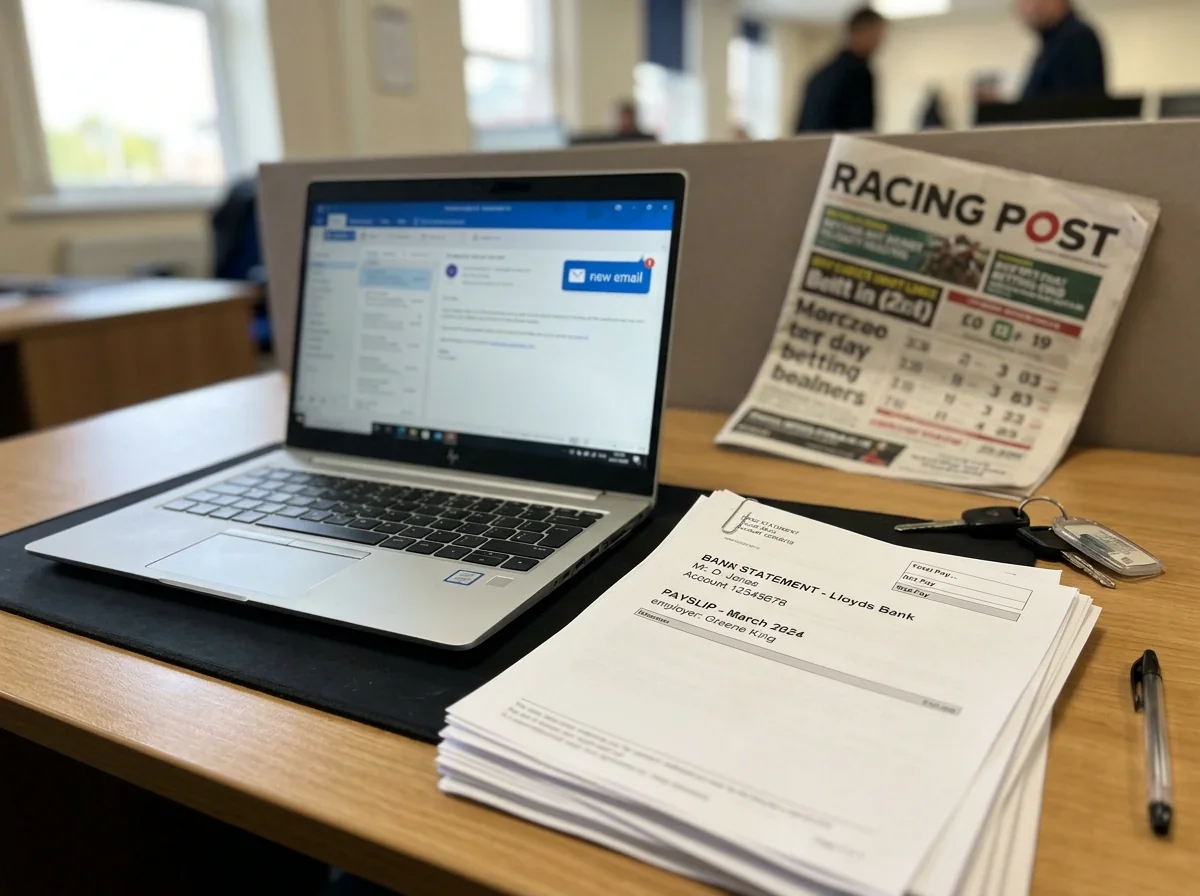
The Email That Changes How You Bet
A punter I have known for fifteen years had been wagering £200-£400 a week on Saturday racing for most of his adult life. In March 2025 his main bookmaker emailed him asking for three months of bank statements and a payslip. He thought it was a phishing attempt. It was not. It was the new affordability regime arriving at his account, and within ten days he was either submitting documents or watching his maximum stake drop to a quarter of what it had been.
That experience is now common across the UK racing punter base. Affordability checks moved from a back-burner regulatory concept into the day-to-day reality of betting accounts during 2024 and 2025, and the way bookmakers actually run them is meaningfully different from how the policy debate describes them. Understanding what happens at each threshold — and what your options are when an email arrives — is part of the basic operational knowledge of being a UK punter in 2026.
Learn more about best bet in horse racing on our main page.
How the Checks Actually Work
Affordability checks are a regulatory mechanism under which UK-licensed bookmakers must assess the financial sustainability of customers whose betting activity crosses defined thresholds. The mechanism comes in two layers. The first layer is the light-touch financial vulnerability check — typically an automated review of publicly available data and the customer’s account behaviour. The second layer is the enhanced due diligence review — which requires the customer to submit documentary evidence of income, savings or sources of funds.
The light-touch check runs in the background and the customer often does not know it has happened. The bookmaker checks publicly available data — bankruptcy records, county court judgements, electoral roll information — and combines this with the customer’s account behaviour to produce a risk score. If the score is clean, the customer continues betting without interruption. If the score raises flags, the bookmaker either tightens monitoring or moves to the enhanced layer.
The enhanced layer is where customer involvement becomes unavoidable. The bookmaker requests documentary evidence — typically bank statements covering three to six months, payslips, P60s, savings account records, or self-employment financial statements. The customer has a window in which to respond, usually between seven and 30 days depending on the operator. If the documents satisfy the bookmaker that the customer can sustain their level of betting without financial harm, the account continues. If the documents are not provided, or do not satisfy the bookmaker, account restrictions follow.
The checks have been live in some form since August 2024, when the initial threshold was set at £500 of monthly net deposits. The system was tightened further in February 2025 when the threshold dropped to £150 of monthly net deposits — a level that captures a much larger share of regular UK racing punters than the original threshold ever did.
The Threshold Changes That Reshaped the Market
The two threshold changes — August 2024 introducing £500, February 2025 lowering to £150 — are the structural events that defined how affordability checks affect UK racing punters. The £500 threshold caught the genuine large-stakes cohort but left the average weekend punter largely untouched. The £150 threshold pulls in a much broader population.
To put the £150 figure in context. A punter staking £20 each-way on three Saturday races, four weeks a month, deposits £480 a month before deductions — comfortably above the £150 threshold. A punter staking £10 win-only on the headline race of every Saturday card, with no other activity, deposits £40 a month and sits well below. The threshold catches almost any punter with regular Saturday engagement on a competitive card, not just heavy stakers.
The implementation is uneven across operators. Some bookmakers run automated light-touch checks at the £150 mark and only escalate to enhanced checks if specific risk flags appear. Others escalate more aggressively, treating the £150 threshold as the gateway to documentary review. The variation across operators creates a real difference in experience — the same betting pattern may produce no checks at one bookmaker and an immediate document request at another.
The trajectory of the regulatory regime is also worth noting. The £150 threshold has been described as a frictionless check designed to operate without customer disruption, but the practical reality has been that even light-touch checks produce visible account changes for affected customers — reduced promotional offers, lower stake limits, tighter cash-out rules. The “frictionless” framing applies to the technical process more than to the customer experience.
The Real Impact on Punters
The visible impact of affordability checks falls into three categories. The first is stake restrictions. Accounts flagged through the affordability process often see their maximum stake on individual races reduced — typically to between £20 and £50 per race depending on the operator and the specific flag. This is the most immediate operational impact for affected punters.
The second is promotional restrictions. Flagged accounts often lose access to BOG, extra-place offers, enhanced odds promotions and bookmaker bonuses. These promotions had historically added an estimated 5-10% to annual profitability for disciplined punters via BOG alone, and their removal materially shifts the long-run economics of a flagged account.
The third is the migration effect. Punters whose accounts have been restricted at major UK books often respond by moving betting activity elsewhere. A significant share of that migration goes to other regulated operators, which is the regulator’s intended outcome. A meaningful subset, however, moves outside the regulated market entirely.
The data on this migration is sobering. A third of large punters — those staking £1,000 or more on individual bets — reported using unregulated sites within the previous 12 months, according to Racing Post survey data from 2025. The unregulated sites do not run affordability checks, do not contribute to the levy, and do not provide the consumer protections that the regulated market offers. Gráinne Hurst, CEO of the Betting and Gaming Council, framed the dynamic bluntly: “These parasite operators don’t pay tax, don’t care about safer gambling, and do not contribute a penny to the levy.”
For the disciplined punter who stays within the regulated market, the practical reality is that affordability checks are now part of the ongoing cost of being a UK punter. Document submission, account-by-account monitoring, and acceptance that promotional access will narrow over time are operational features of the modern market rather than temporary policy events.
Where the Industry Sits on the Policy
The industry response to affordability checks has been measured rather than confrontational. The BHA’s official position acknowledges the principle of consumer protection while resisting blanket application. Their statement put it directly: “Sweeping blanket checks on affordability are not appropriate, with any measures needing to be proportionate and targeted at individuals and their specific circumstances.” The position reflects a recognition that some form of financial vulnerability check is reasonable, paired with concern that the implementation has captured a much wider population than the policy initially targeted.
The wider industry concern is the unintended consequence. By tightening the regulated market, the policy has produced the migration of high-stakes punters to unregulated alternatives — a population that now sits outside any consumer protection framework, contributing nothing to the racing industry’s funding model, and exposing themselves to operators with no oversight. The trade-off between protecting at-risk punters and pushing high-stakes punters into unregulated channels is the central policy debate of 2025-2026.
Treasury policy has responded in part by providing additional funding — £26 million was allocated to the Gambling Commission to tackle the unregulated market. The enforcement direction was articulated by Ian Murray MP, DCMS Minister, in 2025: “If someone is operating in the illegal market, we are coming after them — legislatively, regulatorily and with money.” Whether that enforcement effort can meaningfully reverse the migration remains contested, but the policy direction is clear.
For racing specifically, the concern is that the punter base most affected by affordability checks — high-stakes, frequent, knowledgeable punters — is precisely the population that historically generated the largest share of racing’s betting handle. If that population thins, the levy contributions thin with it, and the funding model that supports prize money, integrity and veterinary science narrows alongside the betting turnover that pays for it.
What to Do When You Get the Email
The practical workflow when an affordability email arrives is straightforward but requires preparation. Respond within the bookmaker’s stated timeframe rather than ignoring the request — non-response leads automatically to account restrictions. Submit the requested documents in clean copies, redacting unnecessary personal details that are not directly relevant to the financial assessment but keeping income and balance information visible.
The documents most commonly requested are recent bank statements, payslips, P60s and savings account records. For self-employed punters, recent self-assessment returns or accountant-prepared statements typically substitute for payslips. The key is that the documents collectively show income and savings sufficient to support the betting activity the account has produced.
If the documents are accepted, the account usually returns to normal operation, sometimes with light-touch monitoring continuing in the background. If the documents are not accepted — or not provided — restrictions follow. Common restrictions include reduced maximum stakes, withdrawal of BOG on the account, removal from promotional offers, and in some cases full account closure.
Maintaining accounts at multiple bookmakers reduces the operational disruption when any single account gets flagged. Punters with two or three active accounts can shift their activity to the operators where they remain in good standing, while a flagged account sits dormant or runs at reduced stakes. The discipline pays off when one account inevitably runs into a check that other accounts have not yet triggered.
The other practical thread that connects directly to affordability checks is the regulatory funding mechanism that sits alongside them — the levy structure that pays for UK racing’s prize money, integrity and veterinary science. The detail is in how the UK horserace betting levy works and where the money goes, which puts affordability checks in their wider regulatory context.
You may also find All-Weather Horse Racing Betting: A Year-Round UK Edge interesting.
The New Operational Reality
Affordability checks are not going away, and the threshold trajectory suggests the regulatory direction is toward tighter, not looser, oversight. The punter who treats checks as occasional disruptions misreads the situation. The punter who builds checks into ongoing account management — multi-bookmaker accounts, document preparation, response readiness — adapts to the regulatory environment without losing meaningful betting capacity. The market has changed, the rules have changed, and the punters who acknowledge that and adapt to it continue to wager effectively. The punters who do not are the ones whose accounts quietly stop working and who never quite understand why.
What documents might a UK bookmaker request?
The most common documents are recent bank statements covering three to six months, payslips, P60s, savings account records, and self-employment financial statements for the self-employed. The specific documents requested vary by operator and by the type of check being run — light-touch checks may require no documents at all, while enhanced reviews typically require multiple pieces of evidence. The documents collectively need to demonstrate that the customer’s income and savings can support the betting activity the account has produced. Redacting unnecessary personal details while keeping income and balance information visible is acceptable and usually preferred.
Can I refuse an affordability check?
Practically, no — refusing means accepting account restrictions. UK-licensed bookmakers are required by the Gambling Commission to run affordability checks at the relevant thresholds, and they cannot continue providing full account services to customers who refuse to engage with the process. The choice is between submitting the documents and accepting whatever assessment results, or declining to engage and seeing the account restricted to reduced stakes, withdrawn promotions, or full closure. Some punters in the high-stakes cohort have responded by moving activity to unregulated operators that do not run the checks, but that route trades away all the consumer protections that come with the regulated market.
Written by the editors at Best bet in Horse Racing.