Betfair Exchange for UK Horse Racing: Backing, Laying and Why It Matters
 Available in US
The Market Where Punters Set the Price
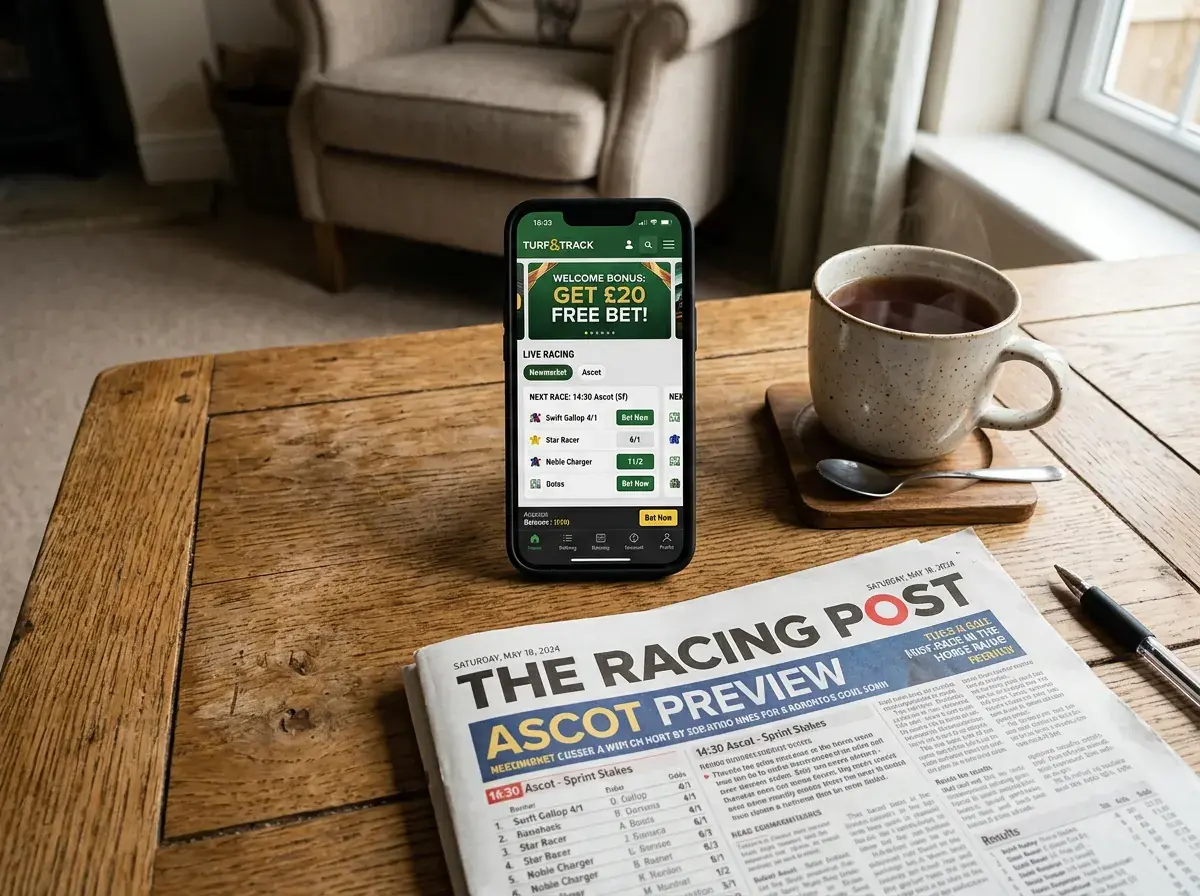
Five years into using Betfair Exchange I still remember the first time the back-lay distinction clicked properly. A horse I had backed at 9/2 in the bookmaker shop that morning was sitting at 5.5 to back and 5.6 to lay on the exchange ten minutes before the off. Same horse, same race, prices that contained no bookmaker margin — because there was no bookmaker. There was just other punters offering to take the other side of my bet.
That is the structural difference between a traditional bookmaker and the exchange, and it changes the whole game. On the exchange, prices are not set by a bookmaker’s risk team. They are set by the matching of punters who want to back a horse and punters who want to lay it. The exchange itself takes a commission on winning bets — Betfair’s standard commission is 5%, sometimes lower depending on account activity — and that commission is the entire margin in the system. There is no overround stacked into the prices.
The result is a more honest market than anything offered by traditional bookmakers. The catch is that you have to learn to think differently to use it well. The mental model that works for bookmaker punting actively misleads you on the exchange.
Find the best options for best bet in horse racing.
Back and Lay: Two Sides of the Same Bet
To back a horse on the exchange is what every punter already understands — you are betting that the horse will win, you stake an amount at a given price, and if the horse wins you collect.
To lay a horse is to take the bookmaker’s position on that horse. You are betting that the horse will not win. Your stake — known as your liability — is the amount you stand to lose if the horse does win. Your potential winnings are the backer’s stake. If you lay a horse at 4.0 for a liability of £30, that means somebody on the other side has backed it for £10 to win £30. If the horse loses, you collect their £10 stake (minus commission). If it wins, you pay out £30.
This asymmetry is what trips up new exchange users. Backing a 4.0 shot risks £10 to win £30. Laying the same horse at 4.0 risks £30 to win £10. The liabilities are inverted, and the maths reflects that. You have to keep track of both sides of every bet you place because the exposure profile is fundamentally different.
The practical implication: laying short-priced horses carries enormous liability for small returns, and laying long-priced horses returns small wins for small risk. Both extremes have their place. Neither is automatically good. The whole craft is matching the right side of the bet to the right opinion you actually hold.
Commission and What It Really Costs
The 5% commission is the exchange’s revenue stream, and it is calculated on net winnings — meaning your profit on a market, not your stake. Win £100 on a race, pay £5 commission. Win £20 across a series of bets that included some losers, pay £1 on the £20.
Doing the maths against bookmaker prices is where the exchange shows its real character. A typical UK win market on a competitive race carries a bookmaker overround of 15–25% — meaning the implied probabilities of all runners summed exceed 100% by that margin, and the gap is the bookmaker’s edge. The exchange equivalent of that race usually shows a near-100% book once you account for the back-lay spread, with the exchange’s 5% commission only triggered on net winnings.
For a punter who wins moderately often, the maths favours the exchange consistently. For a punter who loses, it does not matter — neither model rewards you. The exchange’s structural advantage is most visible on horses priced longer than even-money, where the bookmaker’s overround weighs heaviest on the price you can take. A horse you can back at 6/1 at a bookmaker often trades at 7.0 or even 7.2 on the exchange before the off. That is a 14–20% price uplift, against which the 5% commission is a small cost.
Reading Market Depth
Market depth is the single most important concept the exchange adds to your toolkit, and it is the one most casual users ignore. The exchange shows you not just the current best back and lay prices, but the volume of money available at each price level. A 6.0 back price with £8,000 available behind it means a serious bet can be placed at that price without moving the market. A 6.0 back price with £40 available means the next bet of any size will push the price down.
This matters for two reasons. The first is execution. If you want to back a horse for £200 but only £40 is offered at the best price, your bet will not be matched in full at that price — the remaining £160 will sit unmatched, waiting for someone to come along and lay it. You have to either accept partial matching, lower your price, or wait.
The second reason is informational. Deep markets tell you the price is robust — it reflects real consensus among informed money. Thin markets tell you the price is fragile — it can move with a single significant bet, which means the displayed price is closer to a guess than a settled view. UK race markets are typically deep on the morning of major Saturday cards and at festival meetings, and thin on midweek all-weather races where casual interest is low. Adjust your confidence in the displayed price accordingly.
In-Running: A Different Sport Entirely
The exchange comes alive in-running. From the moment the stalls open until the line is crossed, prices on the exchange move dynamically as the race develops — and the volumes traded during those 90 seconds often exceed pre-race liquidity by a factor of five or ten.
The mechanic that makes in-running possible is a deliberate transmission delay between the live broadcast and the matching engine. By the time you see a horse make a move on the TV, the price on the exchange has already responded — sometimes by several points. The punters trading in-running successfully are either watching multiple feeds at lower latencies, modelling pace mathematically, or doing both. Casual users almost always lose money in-running because they are reacting to events the market has already priced.
The straightforward use of in-running for retail punters is risk management, not opportunity hunting. If you have backed a horse pre-race and it makes its move at the two-furlong pole, you can lay back a portion of your stake at the shortened price to lock in a guaranteed return regardless of whether the horse holds on. This is sometimes called “trading out” or “greening up”, and it removes a portion of variance from your bet at the cost of capping your maximum return. Used selectively, it is a useful tool. Used compulsively, it costs you the upside of your good selections without reducing the cost of your bad ones.
When the Exchange Wins Against Bookmakers
The exchange’s structural price advantage is consistent on longer-priced horses, on deeply traded markets, and on bets where SP-equivalent execution is acceptable. It is less consistent on very short-priced favourites, where bookmaker overrounds are tightest and exchange spreads are sometimes wider than the price differential would suggest.
A practical heuristic. For horses priced shorter than 2/1, the exchange and bookmakers are often within a tick of each other, and the 5% commission can wipe the difference. For horses between 2/1 and 8/1, the exchange typically beats the bookmaker price by 5–15% even after commission. For horses longer than 8/1, the exchange beats bookmakers by 15–40% on price, because the bookmaker overround compounds heavily on outsiders.
The other place the exchange wins is on bets where you actively want the lay side — selections you think the market is overrating, favourites you want to oppose in fields where the maths suggests the price is too short. The bookmaker market simply does not offer those bets at a competitive price. The exchange is the only sensible venue for that sort of position.
Using two or three traditional bookmaker accounts in parallel typically lifts long-run returns by 2–5%. Adding the exchange as a fourth venue captures a further set of cases where bookmakers do not compete on price. Across the four legs combined, the punter using both bookmakers and the exchange consistently has a meaningfully better price-execution profile than the punter relying on a single account.
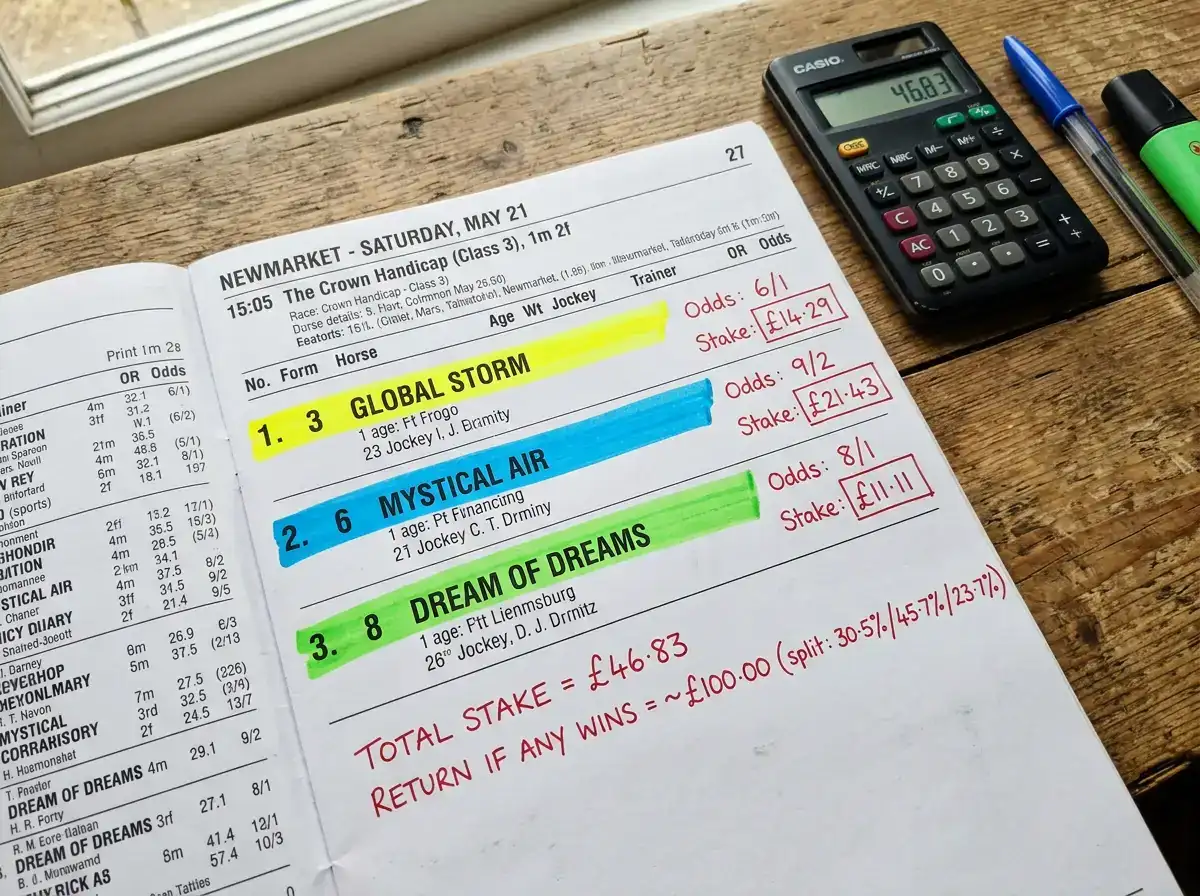
One related layer that intersects with exchange use: when you start running multiple selections within a race and want to size them for equal return regardless of which one wins, the next concept worth understanding is dutching to cover multiple runners for a fixed profit. The exchange is often the cleanest venue for executing dutches because the prices are sharper and the commission is only triggered on net winnings.
What the Exchange Asks of You
The exchange is not a beginner’s tool, but it is not as esoteric as its reputation suggests. The two things it demands are mental flexibility — the willingness to think about every market in terms of both back and lay sides — and price discipline. The discipline matters because the exchange shows you exactly what every other punter on the market thinks the price should be, and that information is either valuable or distracting depending on whether you can use it.
Read our detailed review of Cheltenham Festival Betting Strategy: Four Days of UK Jumps Markets.
If you are an instinctive punter who likes to take a price and not look at it again, the exchange will feel like noise. If you are an analytical punter who likes to understand why a price is what it is, the exchange is the cleanest mirror you can hold up to the UK racing market. Either way, treating it as a complement to traditional bookmaker accounts rather than a replacement gives you the best of both worlds — bookmaker promotions on the win side, exchange prices on the lay side and on longer-priced backs, and the flexibility to choose the venue that best fits each individual bet.
Is laying horses to lose profitable long-term?
It can be, but only for punters who have a documented edge in identifying overvalued horses — which is a much rarer skill than identifying winners. Laying every favourite blindly produces a return slightly worse than backing every favourite, because the bookmaker overround on favourites is small and the exchange commission consumes the rest. Profitable laying requires the same form-reading discipline as profitable backing, applied in reverse. Short-priced horses with poor recent form, inflated reputations or unfavourable pace scenarios are the natural lay candidates, but the liability profile means losses come in large chunks. Most punters who try systematic laying give up within six months.
What’s a typical Betfair commission rate?
The standard rate is 5% on net winnings per market, charged only on positive outcomes. Betfair operates a points-based system where high-volume users can move toward lower rates over time, though the structure has changed several times in recent years and details vary by account. Promotional reductions occasionally apply to specific markets or time windows. The key practical point is that commission is calculated on net winnings within a market, not on stake, which makes the effective cost lower than the headline 5% suggests for punters who run mixed back-and-lay positions on the same race.
Written by the editors at Best bet in Horse Racing.