Grand National Betting Guide: Strategy for UK’s Biggest Race
 Available in US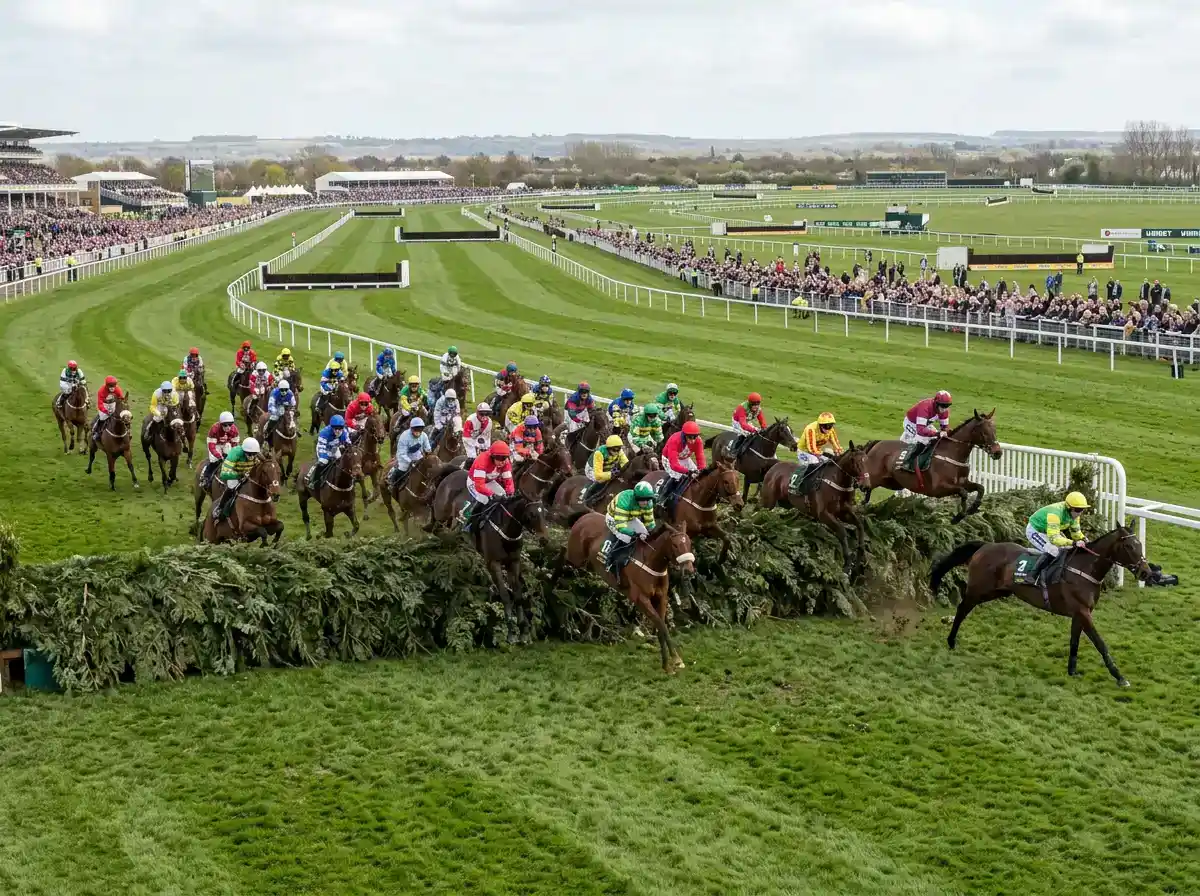
The Race That Isn’t About Picking the Winner
Every April since I was fifteen I have watched the Grand National with the same nervous attentiveness most people reserve for a job interview. Forty horses, four and a quarter miles, thirty fences spread across two laps of Aintree. The race itself has a rhythm so unlike any other on the UK calendar that the punting decisions it asks of you are also different in kind, not just degree.
The mistake almost every casual punter makes on Grand National Saturday is treating the race like a regular handicap and trying to pick the winner. With a 40-runner field over the most demanding test in jumps racing, the act of identifying which specific horse will be in front at the elbow is closer to a lottery than analysis. The serious work is structural: which bet type matches the variance of the race, which place coverage extracts the most expected value, and which handicap principles actually transfer to a field this large. Pick the structure first, and the selection becomes a much smaller decision.
Learn more about best bet in horse racing on our main page.
What Makes the Race Unique
The Grand National is run over four miles, two and a half furlongs — by some measures the longest competitive race in mainstream UK racing. The fences are larger and less forgiving than at any other course, with Becher’s Brook, the Chair and the Canal Turn carrying enough character to be names every casual viewer recognises. The course itself is flat with a single sharp turn at the elbow, which means strategic positioning matters more than at most jumps tracks.
What this combination produces, statistically, is a finishing distribution unlike anywhere else in UK racing. Plenty of horses do not complete — fallers, unseats, refusals, pulled-up cases. The non-finishers in a Grand National typically run to between 12 and 20 of the 40 runners. The completion rate has improved meaningfully since the fence modifications of the early 2010s, but the underlying variance of which specific horse holds together for the full trip remains higher than any other UK race.
That variance is the whole reason the betting market on the National looks different. Prices are longer than equivalent handicap chases at other festivals, place terms are more generous, and bookmaker margins are wider — because the bookmakers themselves know the distribution of outcomes is harder to predict than a normal race.
The other characteristic worth knowing: stamina is the single most reliable predictor in National form. Horses with proven form at three-and-a-quarter miles or longer outperform their odds. Horses whose best form is at shorter distances, regardless of class, consistently struggle. This is the simplest filter that survives every analytical season.
Why Field Size Changes Every Each-Way Bet
A 40-runner field reshapes the maths of each-way betting in ways that do not apply at any other race in the UK calendar. Standard each-way terms across most UK races pay four places on handicaps of 16 or more runners. On the Grand National, the major books extend that to five, six, seven, eight or even nine places depending on the bookmaker, the year and the specific offer attached.
The reason this matters is that the place portion of the bet pays at one-quarter or one-fifth of the win odds, and an extended place range multiplies the outcomes that produce a return. A 25/1 each-way bet at standard four-place terms loses if your horse finishes fifth. The same bet at eight-place terms returns the place portion if your horse finishes anywhere from first to eighth, paying 25/4 or 25/5 of your place stake at standard fractions.
Worked example. Suppose you back a horse at 40/1 each-way for £10 total — £5 on the win, £5 on the place. Place terms at one-fifth the odds, eight places paid. Your horse finishes seventh. The win portion loses; £5 gone. The place portion pays £5 × (40/5) = £40 profit on the place, plus your £5 place stake returned. Net result on the bet: a return of £45 against £10 staked.
That structure converts a marginal selection into a positive-expectation bet, because the bookmaker is essentially paying you to take additional place outcomes that no other handicap in the year covers. The 9-10 million UK viewers who watch the race annually drive a casual betting handle that makes these extended place offers commercially viable — the bookmakers absorb the cost as an acquisition tool, and the disciplined punter extracts the value.
The rule. On the Grand National, structure every speculative bet as each-way at the most generous place terms you can find across your accounts. Win-only is for horses with sub-10/1 prices and a genuine winning chance. Anything 12/1 or longer, the each-way structure dominates.
Handicap Dynamics in a 40-Runner Field
The National is a handicap, which means every horse carries a specific weight allocated by the BHA’s handicapper to reflect rated ability. In theory, a perfectly weighted handicap finishes with the entire field crossing the line simultaneously. In practice, the handicapper has to balance the demands of forty horses across a distance that exposes stamina differences and a course that exposes jumping ability — and the resulting weights are often imperfect.
Where the handicap typically misfires is at the top and bottom of the weights. Top-weighted horses — those rated highest — must carry weight that exceeds anything they have hauled in their normal racing, and the long trip combined with that burden defeats them more often than the market expects. Bottom-weighted horses get the benefit of low weight but are often there because they are rated low for a reason, and few of them have the class to translate that weight relief into a winning chance.
The sweet spot for National form is typically horses rated in the middle of the handicap — somewhere between 145 and 158 in current BHA terms — who are racing off weights that match their normal racing comfort zone. Add stamina-proven form over three-and-a-half miles or further, plus completion experience in any major chase event, and you have the filter that consistently identifies most of the actual placed finishers each year.
Age matters more here than at most chases. The National is rarely won by a horse under eight, and almost never by a horse under seven. Older horses with proven stamina dominate the placed finishers; younger horses, however talented, usually need a year or two more before they are National-ready.
What Recent Favourite Form Tells Us
Cheltenham Festival 2024 produced a 33% favourite strike rate across the four days, which on its own would suggest the market reads jumps races accurately. Buried in that statistic is the fact that the Grand National 2024 was itself won by the favourite — a rare occurrence in the history of the race, and one that distorted that year’s favourite figures upward.
The longer history of the race tells a different story. Favourites in the Grand National win less often than favourites in any other major UK chase. The combination of a 40-runner field, the demanding fences and the long trip creates enough variance that even the best-fancied horse usually loses. Place markets are kinder to favourites — they fill the placed positions much more reliably than they win — but win backing of favourites in the National is a strategy that loses money over time on level stakes.
What this means in practice. The market price on the favourite, typically in the 8/1 to 10/1 range, looks short relative to its win probability. A horse the market makes 8/1 on Grand National morning has a true win probability closer to 7%, not the implied 11% the price suggests. Backing the favourite each-way captures some of the place value, but the win portion is consistently overpriced relative to actual win frequency.
The implication for selection. Look one or two places down the market rather than at the top. Horses priced 16/1 to 33/1 with good National-style form often offer better expected value than the favourite, because the market overprices the top and underprices the next tier of credible contenders.
The Economic Weight Behind the Race
The Grand National generates roughly £60 million annually for the Liverpool City Region economy, drawing crowds and hospitality spending that no other UK race comes close to matching. The television audience runs to 9-10 million viewers per year, a scale that makes the National the only horse race most casual UK viewers watch from start to finish.
That economic weight has a direct consequence for the betting market. Casual money pours in throughout Grand National week, predominantly on famous names, recognised colours and trainer reputation rather than on form. Professional money on the National often finds value by opposing the horses that casual money has shortened, particularly in the days immediately before the race when public interest peaks and prices on big-name horses collapse below their fundamental value.
This is also why extra-place offers proliferate during National week. Bet365 paid out more than £50 million on BOG-related payouts during the Cheltenham Festival 2026 alone, and the National produces comparable promotional spend across major UK books. The disciplined punter treats the proliferation of promotions as a structural feature of the market rather than as marketing fluff — extra places convert otherwise marginal each-way selections into positive-expectation bets, and the National is the single race where that effect is most pronounced.
The other layer worth noting is that the same patterns extend to the wider jumps calendar peak. The festival cycle reaches its climax across the spring, and many of the analytical principles that apply to the National also shape the four days at Prestbury Park earlier in the month. The companion piece on Cheltenham Festival betting strategy covers those four days in detail, including the favourite-strike-rate dynamics that make the festival a different kind of betting test from Aintree.
The Bet to Place on Saturday
If I had to compress the National strategy into a single instruction it would be this. Pick one horse with mid-handicap weight, proven stamina at three-and-a-half miles or longer, completion form at a previous demanding chase, and an age between eight and eleven. Back it each-way at the most generous place terms you can find across your active accounts. Stake at half your normal unit, because race variance is too high for full-unit exposure regardless of conviction.
You may also find How Affordability Checks Reshape UK Horse Racing Promos and Free Bets interesting.
Skip the favourite unless your form analysis specifically supports it; the market routinely overprices the top of the National book. Used this way, the race becomes a structural bet rather than a guess. The actual winner remains unpredictable. The expected value of how you structure the bet does not.
How many places do bookmakers pay on the Grand National?
Standard each-way terms on the National range from five to nine places across the major UK books, with the specific offer varying by year and by operator. Most books advertise their place coverage prominently in the week before the race because it is a major customer-acquisition signal for casual punters. The disciplined approach is to check the offers across two or three active accounts on the morning of the race and place each-way bets through whichever account is offering the most generous terms for your specific selection — the difference between five and seven places can swing a marginal bet by 30% or more on expected value.
Is the Grand National favourite usually a good bet?
Generally no on win-only stakes, occasionally yes on each-way. The favourite wins the National less often than market price implies, because the combination of a 40-runner field, demanding fences and a four-and-a-quarter mile trip generates enough variance that even the best-fancied horse usually fails to complete or finish first. Place markets are more forgiving to favourites — they fill the placed positions reliably — so each-way backing of favourites captures place value while the win portion remains structurally overpriced. The 2024 favourite winning was the exception, not a signal that the market has corrected.
Published by the Best bet in Horse Racing team.